Wine Investment Storage Solutions for Smart Investors
Proper storage isn't just a luxury for your wine investment—it's essential for preserving both quality and financial value. While a bottle of Château Lafite Rothschild might look impressive on your kitchen counter, improper storage could transform your liquid asset into expensive vinegar. Let's explore how to protect your wine investments through optimal storage practices.
The Financial Impact of Proper Storage
The connection between storage and investment value is direct and significant:
- Provenance premium: Wines with verified professional storage history can command 10-15% higher prices at auction
- Value preservation: Proper storage maintains investment-grade status, while poor conditions can render wines unsellable
- Cost efficiency: Storage costs for wine investments are typically lower than for other tangible assets like gold, enhancing overall ROI—a $100,000 wine investment generally incurs lower storage fees than equivalent gold holdings
As one striking example, a bottle of Château Lafite Rothschild 1869 sold for $230,000—a price only possible because of perfect preservation and impeccable provenance documentation throughout its 150-year history.
Essential Storage Conditions for Investment-Grade Wine
Investment-worthy wines require specific environmental conditions that mimic the traditional underground cellars of European wine estates:
Temperature
- Optimal range: 13°C (55°F) ±2°C
- Why it matters: Fluctuations accelerate aging and can "cook" wine, destroying its investment value
- Risk factor: Even brief exposure to temperatures above 25°C (77°F) can permanently damage fine wine by causing irreversible chemical changes
- Long-term impact: A properly temperature-controlled environment can extend a wine's peak drinking window by 5-10 years, significantly increasing investment returns
Humidity
- Optimal range: 60-70%
- Why it matters: Too dry (below 50%) shrinks corks, allowing oxygen seepage; too humid (above 80%) promotes mold and label deterioration
- Protection measure: Consistent humidity preserves label condition—crucial for authentication and resale
- Investor insight: Label condition can impact valuation by 5-10%, particularly for highly collectible vintages
Light Exposure
- Requirement: Minimal to none, especially UV light
- Why it matters: Light triggers photochemical reactions that produce hydrogen sulfide compounds, degrading wine quality and appearance
- Solution: Dark storage environments or UV-filtered lighting systems
- Science note: Wine in clear bottles is particularly susceptible—just 3-5 hours of direct sunlight can cause noticeable degradation
Vibration & Movement
- Requirement: Minimal disturbance
- Why it matters: Vibration accelerates chemical reactions and disturbs sediment, potentially damaging a wine's flavor profile permanently
- Risk areas: Avoid storage near appliances, machinery, or high-traffic areas
- Industry standard: Professional facilities often use specialized insulation and vibration-dampening shelving systems
Storage Solutions: Comparing Your Options
Home Cellar
- Pros: Personal control, accessibility, no annual fees
- Cons: High setup costs (€10,000-50,000), maintenance challenges, resale provenance concerns
- Best for: Collectors who prioritize access and plan to drink most of their collection
Wine Refrigerators
- Pros: Controlled environment, moderate cost (€500-5,000), suitable for apartments
- Cons: Limited capacity, potential mechanical failure, higher energy costs, possible vibration issues
- Best for: Small to medium portfolios under 100 bottles
Bonded Warehouses
- Pros: Professional conditions, insurance, tax benefits (no duty/VAT until withdrawn), authenticated provenance
- Cons: Annual fees (€15-25 per case), less accessibility, withdrawal fees
- Best for: Serious investors, tax efficiency, long-term storage plans
Professional Facilities
- Pros: Climate control, security, provenance tracking, often cheaper than home cellar maintenance
- Cons: Higher costs than home storage ($2-5 per bottle annually), physical access restrictions
- Best for:
- Investment-focused collectors with portfolios exceeding €10,000
The Bonded Warehouse Advantage
For serious wine investors, bonded warehouses offer significant benefits that directly impact investment returns:
- Tax efficiency: Store wine without paying duty or VAT until sold or withdrawn—crucial for active trading strategies
- Professional conditions: Precise climate control and security protocols developed specifically for investment-grade wine
- Insurance coverage: Protection against theft, damage, and natural disasters, typically at replacement value
- Provenance documentation: Critical for establishing authenticity at resale, with bottle-by-bottle tracking
- Expert handling: Minimizes risk during transportation or inspection, with staff trained in fine wine handling
Many investors access these facilities through platforms like the fine wine broking platform offered by WineFortune, which provides seamless integration with professional storage solutions.
Storage Timeframes: How Long to Hold?
Different wine types have varying optimal storage windows that investors should consider when building their portfolio strategy:
- Bordeaux reds: 10-30+ years, often peaking around 20-25 years (First Growths can age 50+ years)
- Burgundy reds: 5-20 years, with premier and grand crus aging longest
- Italian collectibles: 10-25 years for Barolos and Super Tuscans
- Vintage Champagne: 10-30+ years for investment-grade bottles, developing sought-after tertiary characteristics
- Cult Californians: 15-25 years for top Napa Cabernets
- Sweet wines: 20-50+ years for Sauternes, Tokaji, and TBAs, often outliving their dry counterparts
When considering which wines to invest in, factor in these timeframes against your investment horizon. Longer-lived wines typically command higher premiums at maturity but require more patience and storage commitment.
Common Storage Pitfalls to Avoid
Even experienced collectors make these costly mistakes:
- Inconsistent temperature: Fluctuations above 3°C accelerate aging and damage wine through repeated expansion and contraction
- Storing upright: Long-term vertical storage dries corks, allowing oxygen ingress—always store collectible wines horizontally
- Kitchen/living area storage: Ambient temperature and light exposure degrade wine (a common mistake costing collectors millions annually)
- Ignoring provenance: Failing to document storage history reduces resale value by 10-15% compared to identical wines with verified provenance
- Inadequate insurance: Not covering the appreciating value of your collection—update valuations annually as wine investment growth continues
A particularly dramatic example occurred when a collector stored $300,000 worth of first-growth Bordeaux in a vacation home without climate control. After a summer heatwave with multi-day power outage, the entire collection was rendered unsellable—a catastrophic loss that proper professional storage would have prevented.
Professional Management Options
For those seeking hands-off solutions:
- Wine investment funds: Professional entities like those detailed in our wine investment fund guide manage storage as part of their services, often utilizing economies of scale
- Portfolio management services: Companies that handle storage, insurance, and inventory tracking with sophisticated database systems
- Fractional ownership platforms: Services that manage the physical assets while you own shares, eliminating storage concerns entirely
The wine portfolio management approach often includes professional storage as a key component, with costs typically ranging from 1-2% of portfolio value annually—a small price to pay for preserving investment-grade status.
Storage Impact on Investment Returns
Proper storage directly affects your bottom line in several quantifiable ways:
- Market premium: Professional storage can add 10-15% to resale value, particularly at auction
- Aging potential: Optimal conditions allow wines to reach peak maturity and maximum value—sometimes doubling or tripling initial investment
- Risk reduction: Professional facilities minimize the risk of catastrophic loss through redundant climate systems and security
- Liquidity advantage: Wines stored in recognized facilities sell faster and at higher prices in the secondary market
- Authentication simplification: Professional storage chains reduce authentication hurdles, commanding premium bids
When evaluating overall wine investment costs, storage expenses should be viewed as value protection rather than overhead—similar to insurance premiums that safeguard asset value.
Technology and Wine Storage
Modern innovations are enhancing storage capabilities in ways that directly benefit investors:
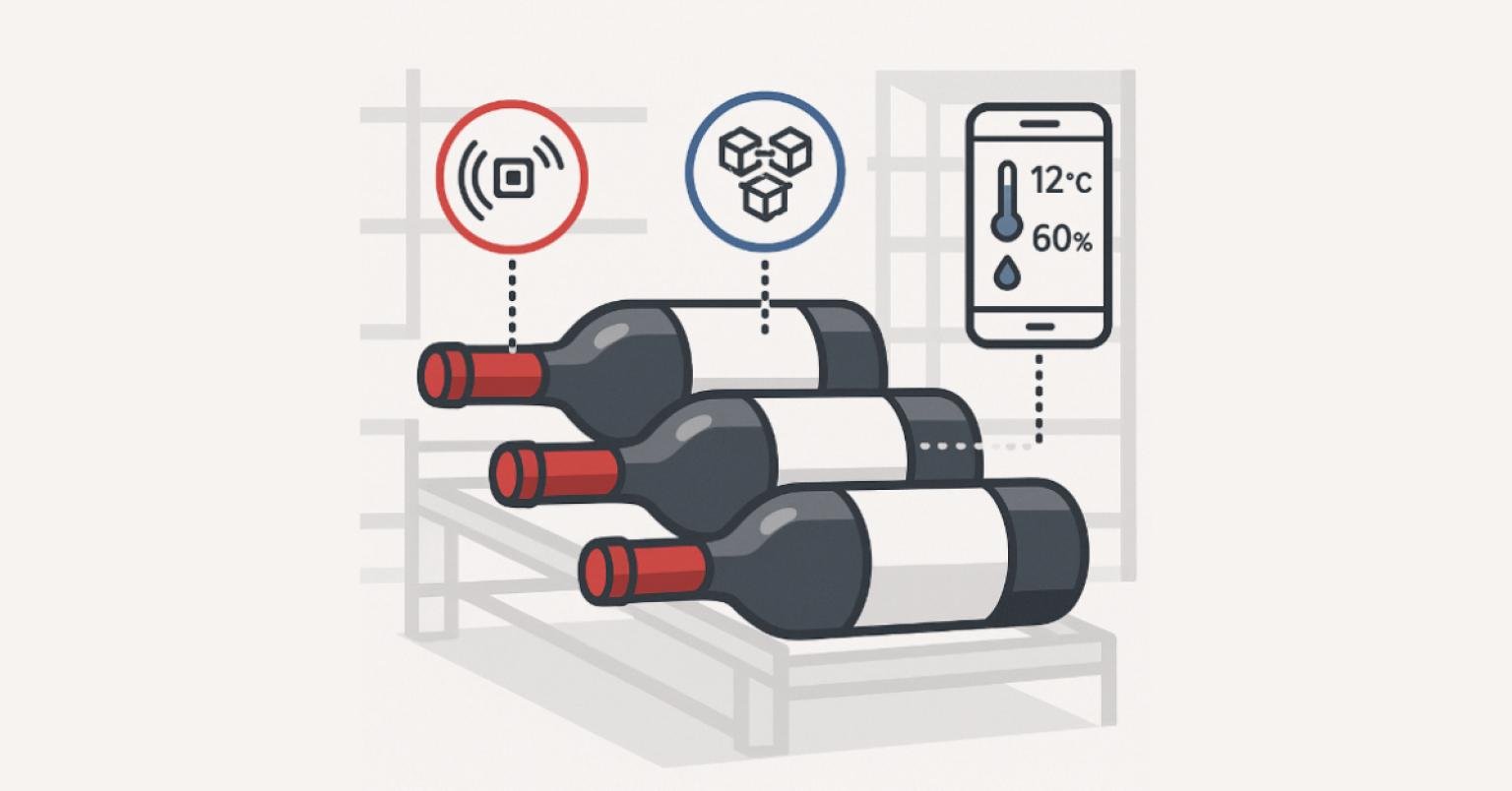
- IoT sensors: Remote monitoring of temperature, humidity, and security conditions in real-time
- Blockchain verification: Creating immutable records of storage conditions and provenance history, increasing buyer confidence
- AI-powered analytics: Predicting optimal drinking windows and market values based on storage conditions and market trends
- Digital asset tracking: RFID and NFC technologies allowing bottle-specific monitoring without disturbing the wine
These technologies are increasingly integrated into fine wine marketplace platforms to ensure transparency and quality assurance. For example, some facilities now provide real-time monitoring apps where investors can check storage conditions for their specific wines remotely—a feature particularly valuable during extreme weather events.
Making the Right Storage Choice for Your Investment
Consider these factors when determining your storage approach:
- Investment size: Larger portfolios justify professional storage costs (generally recommended for collections over $10,000)
- Time horizon: Longer holding periods benefit from stable professional environments
- Geographic location: Home climate affects the viability of personal storage (particularly challenging in tropical or sub-tropical regions)
- Access needs: How frequently you need physical access to your wines
- Budget allocation: Balancing acquisition vs. preservation costs (typically 1-2% annually for storage)
For many investors, a hybrid approach works best: keeping ready-to-drink bottles at home while storing investment-grade wines professionally. This strategy maximizes enjoyment while protecting your most valuable assets.
Conclusion: Storage as an Investment Strategy
Proper storage isn't merely a technical requirement—it's a fundamental investment strategy. By maintaining optimal conditions, you're not just preserving wine; you're protecting and potentially enhancing your financial returns.
The wine investment market increasingly recognizes storage quality as a key value driver, with professionally stored wines commanding premium prices and attracting serious buyers. Data from major auction houses consistently shows that identical wines with superior storage history outperform their counterparts by 10-15%.
Whether you're just beginning with a few bottles or managing a substantial portfolio, implementing proper storage practices will help ensure your wine investments mature as gracefully as the vintages themselves—both in quality and in financial value.
Read next
Top Investment Wine Brands Worldwide That Deliver Serious Portfolio Value
Investment-grade wines have emerged as a compelling alternative asset class, offering both portfolio diversification and the unique pleasure of potentially enjoying your investment. For retail and alternative asset investors looking...
Wine Investment Strategies: Uncorking Returns in a Volatile Market
Fine wine investment offers a compelling blend of portfolio diversification, steady growth potential, and the unique pleasure of possibly enjoying your asset. With the global wine market projected to reach...
Wine Investment Risks and Strategies for Smarter Risk Management
Fine wine investment offers attractive returns averaging 10% annually since 1988, but like any investment, it comes with distinct risks that require careful management. Understanding these risks and implementing effective strategies within...