NFTs - future for the wine world?
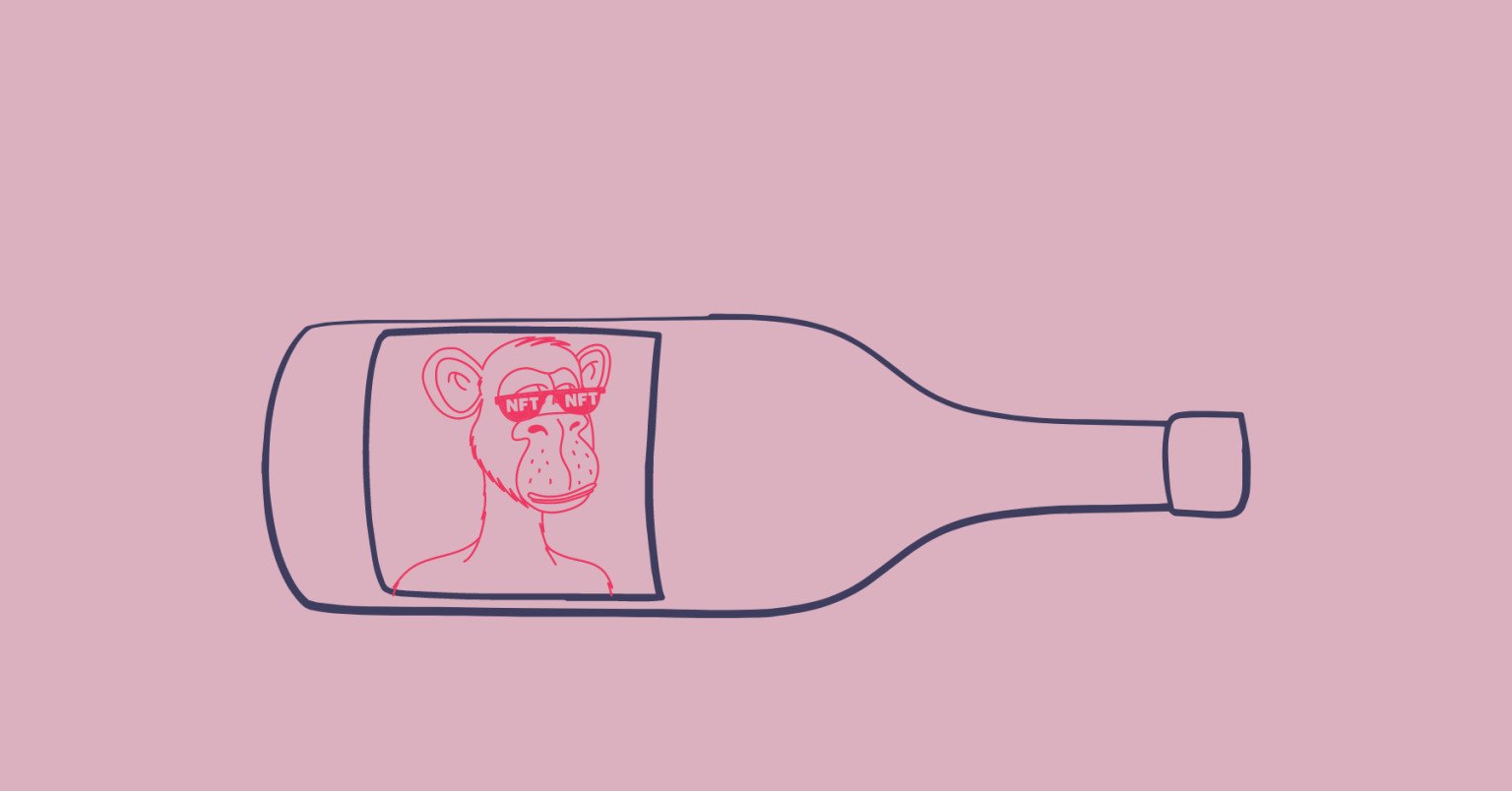
NFT is probably a familiar abbreviation to almost everyone. In short, an NFT is a digital certificate of ownership of something special. These certificates of ownership are assets that are traded and whose prices can even reach millions of euros. Such proofs of ownership are encrypted and run on the sophisticated and complex blockchain technology, meaning they are presumably not falsifiable. It is like a certificate of ownership of a special treasure that belongs to you, protected from counterfeiting. It would be nice to have one of these, wouldn't it? And sell at the right time…
The NFT economy has gained initial momentum in the field of art and music. Each creation is special among which the creations of artists and musicians are often the most visible. In the world of NFTs, there are therefore many digitally special monkeys and various other characters, among other things. These monkeys and characters are now heavily traded in hopes of catching a miracle that will bring you fortune. In part, the name of the miracle is "time" - even an ordinary tree leaf, if it is the only one and from the beginning of time, very old, gradually acquires a special, unique value as a museum exhibit. Even the worst monkey or other character can have significant value in the future just because it dates back to the early days of NFTs.
Of course, one can easily get the impression that NFTs are some kind of temporary fad that will soon be forgotten. Statements of NFT technology today are indeed so-and-so at times, but by today it is clear that the technology itself is here to stay.
The point is that our world is becoming digital and there is no going back. We want to do our things more and more comfortably, faster, more precisely, without intermediaries and unnoticed, with the help of neutral machines and smart programs, and our ever-growing desire for convenience will not get us anywhere in the long run. Everything is digitizing and it would be better if each of us knew what belongs to them in this digital world. Or that this unique goat cheese is really produced by this goat farm and not anywhere else in mass production.
Cheese is usually only a small step away from wine.
With NFT technology, the value of any asset can be increased in a very simple way - by growing the story associated with that asset. People love stories. NFT technology makes it possible to link with the right of ownership, in addition to other rights, various unique testimonies of the origin, fate and end of the asset - whether in the form of text, image, video, music, art, theater, cinema or sculpture. The world of special rights that can be attached to a simple asset with an NFT is also virtually endless. Access, pass, single, multiple, with or without double jumps - as an NFT creator, you are the NFT god who creates these new world passes for people.
Lovers of really good wine are left with only one question in the end - what is the use of NFTs for already excellent wines and winemakers?
A little bit. And quite a lot.
A number of winemakers are trying to increase the visibility of their wines with the help of NFTs. They range from very good, average to very mediocre winemakers. In most cases, this means pairing the wines with some other, additional value - be it a unique packaging or a wine label designed by a famous artist. Of course, the current technological hype is being taken advantage of, and who could be against that. This area of use will probably explode in the future - every wine can be associated with its own special story - song, dance, video, graphic or poem. Wine becomes another medium - a message carrier.
But NFT technology also benefits investment wine producers commercially on a more serious level.
A big problem with very good or investment wines is fraud. There are very few investment wines produced in the world each year. These are produced in wine-wise cold climates, in limited numbers, and not every year's climate is a blessing for the winemaker. This makes fraud of fine wines a profitable business. NFT technology makes it more secure as it’s possible to attach a unique certificate to each manufactured fine wine. Without it you can be sure that it’s a fraud.
The same NFT, or digital certificate, can also contain layers of programming that automatically generate additional revenue for the producer every time a wine is traded at a higher price. With NFT, the fine wine producer finally gains control over his creation, his work of art, which he lacked before. He can see the location, fate and value of his creation.
This kind of control by the wine producer makes it possible to cut out a number of middlemen from the revenue chain and bring additional income to the creators of fine wine. In addition, NFT technology enables small producers to reach the honest market - producers of very good investment wines, whose high marketing costs have prevented them from gaining wider recognition before.
There’s no doubt that web3 is our future. We will be living in it every day. NFT technology is an important part of the digital world and a security guarantor for the future fine wine market.
Read next
French Wine Regions: A Guide for Investors and Enthusiasts
France stands as the heartland of fine wine, with its diverse regions producing some of the world's most sought-after and investment-worthy bottles. Whether you're building a wine portfolio or simply...
Spanish Wine Regions: A Guide to Spain's Wine Country Gems
Spain stands as the world's largest wine-growing country with an impressive 968,000 hectares of vineyards spread across diverse landscapes. From the verdant hills of the north to the sun-drenched plains of...
Champagne Most Expensive Brands Revealed with Price Tags That Sparkle
Looking to explore the pinnacle of luxury in the sparkling wine world? The most exclusive champagne bottles represent not just exceptional taste but also remarkable craftsmanship, history, and rarity that...